

Compliance Blind Spots in Financial Network Monitoring
Financial services handle massive volumes of data alongside strict regulatory scrutiny. With transaction processing expanding across distributed APIs and hybrid cloud links, maintaining low network performance and network monitoring coverage while safeguarding customer data has become a critical operational requirement.
Traditional packet capture and analysis approaches give engineering teams deep visibility into network behaviour. But in financial services, that same network traffic intelligence comes with a hidden cost when the raw data reaching your tools contains sensitive customer information. When you feed unanonymized network traffic into analytics tools, you aren’t just monitoring performance but you are duplicating risk. Without inline packet slicing and field masking, sensitive customer PII like payment tokens, and credentials end up scattered across unsecured log files, APM tool caches, backup archives, and long-term storage. Every secondary system that touches that raw payload silently becomes a high-value breach target.
Common Network Monitoring Gaps That Put Financial Institutions at Risk
1. Microsecond Latency & Downtime Risks
Online trades and banking operations demand near-perfect network stability. In high-frequency trading environments, microseconds separate profit from loss. Dropped frames degrade application performance and lengthen Mean Time to Resolution (MTTR), which can cost millions in downtime.
2. Regulatory Compliance Exposure
Security and performance monitoring tools require packet access to detect threats. However, routing raw data containing customer PII, account numbers, or transaction tokens into third-party monitoring tools creates significant compliance exposure. Under PCI DSS, Primary Account Numbers must be rendered unreadable wherever stored including in monitoring logs, caches and backups. Under Singapore’s PDPA, organisations are required to protect personal data from unauthorised access. Sending unmasked customer data into unsecured tool caches and archives puts both requirements at risk.
3. Tool Oversubscription
Ingesting raw, unscrubbed network traffic into analytical platforms causes CPU throttling, forced packet drops, and escalating license costs. Your tools drown in data they don’t need while missing the threats they were built to detect. When tools are overwhelmed by duplicate or unnecessary data, network performance monitoring becomes unreliable and root cause analysis takes longer, which is exactly when speed matters most.”
Why Raw Packet Capture Creates a Compliance Liability
While microsecond latency and tool load drag down daily performance, data privacy non-compliance carry consequences that can end a business. It represents the single largest financial and reputational liability a financial institution can face. To protect both network speed and regulatory posture, organizations need a dedicated hardware buffer that inspects, slices, and masks traffic at line-rate before any secondary systems or analytical softwares ever see the raw payload.
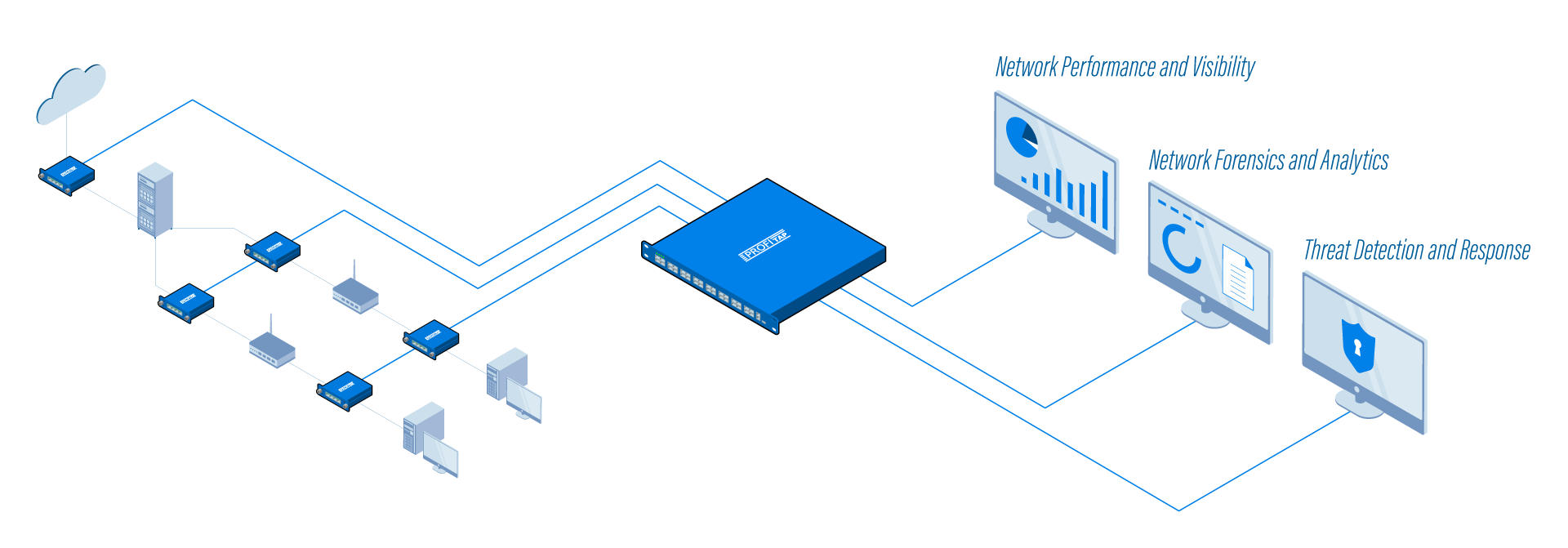
How Profitap NPBs Hardware Eliminates the Risk
- Step 1 (Targeted Filtering): Instantly drops known sensitive streams (e.g., HTTP basic auth headers) at line-rate before they hit analysis tools.
- Step 2 (Hardware Packet Slicing): Strips away sensitive payloads while preserving essential Ethernet/IP headers, protocol identifiers, and transaction metadata. NetOps gains complete packet capture and analysis capability without touching Personally Identifiable Information (PII).
- Step 3 (Inline Field Obfuscation): Automatically masks credit card numbers, national IDs, and session keys directly on FPGA hardware ensuring that even if an analytical log is compromised, the data inside remains completely unreadable.
Filter sensitive traffic during Network Monitoring before it enters your stack! Slice packets to strip payloads while preserving diagnostic metadata. Mask sensitive fields in real-time so internal teams never expose raw customer data.
Your monitoring stays effective and at the same time your compliance stays intact. Your monitoring remains effective while ensuring your compliance stays intact.
